The Practical Kenya Guide · 2026.09 edition
The Practical Kenya Guide
You're reading the free preview. Unlock all 21 chapters →
1. Start here
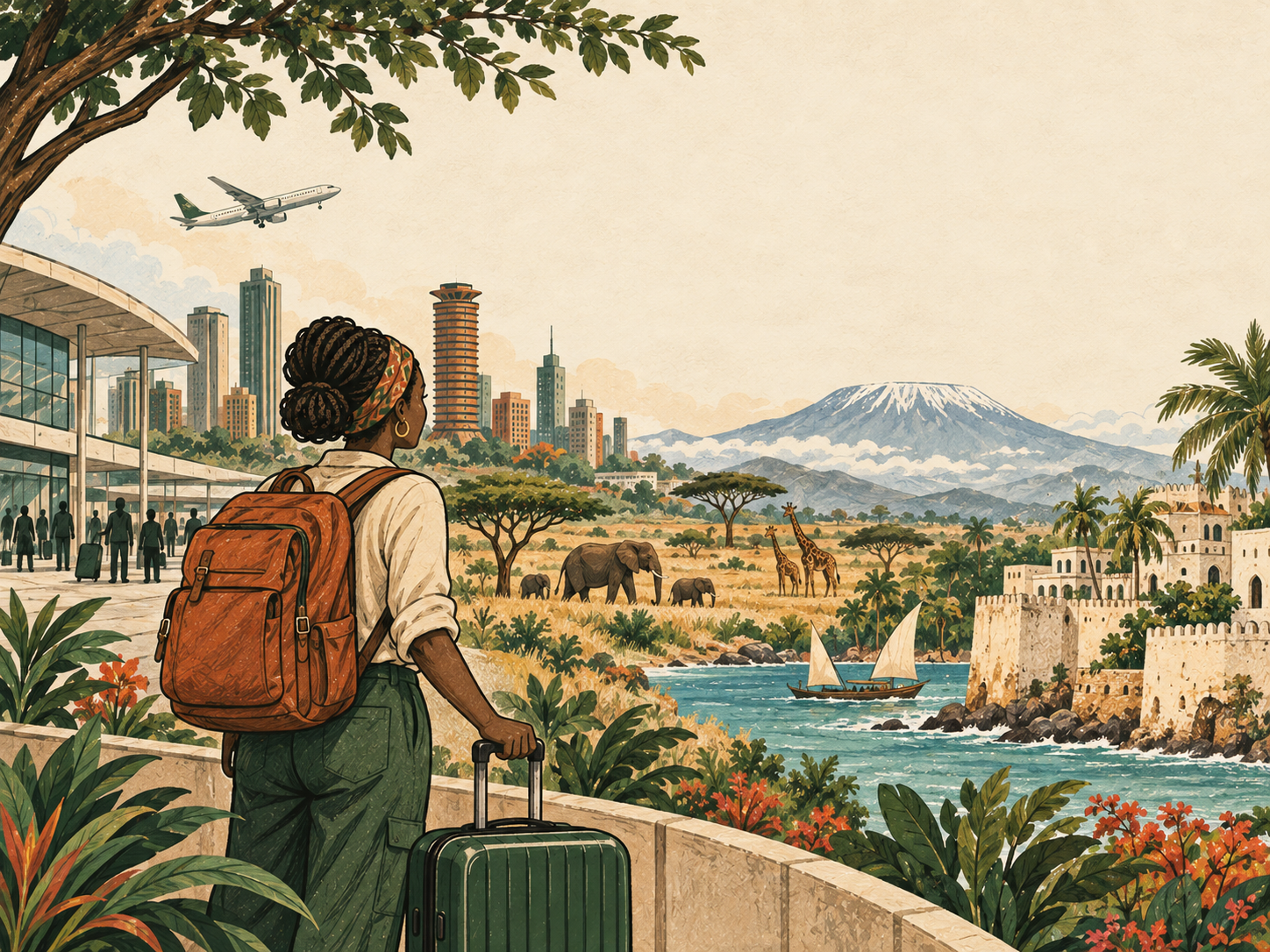
Start here
This guide reduces uncertainty. It doesn't duplicate the website word-for-word, it organises the decisions that actually shape a Kenya trip into an offline-friendly journey.
How to use it: every high-stakes number (fees, entry rules) is dated on the site and links to its official source. Rules change, treat this guide as a decision aid, and confirm live details before you rely on them.
Who it's for: first-time and returning independent visitors, diaspora travellers, and domestic explorers planning by budget, days and interests.
2. Kenya in context
Kenya 101 — Country Basics
Last verified: 15 September 2026 · 🟢 mostly low volatility (population/leadership are medium).
Fast facts
| Official name | Republic of Kenya (Jamhuri ya Kenya) |
| Capital | Nairobi |
| Largest cities | Nairobi, Mombasa, Kisumu, Nakuru, Eldoret |
| Population | ~58.7 million (2026 est.); median age ~20; ~33% urban |
| Area | ~580,000 km² |
| Counties | 47 (devolved county governments since the 2010 Constitution) |
| Neighbors | Tanzania (S), Uganda (W), South Sudan (NW), Ethiopia (N), Somalia (NE); Indian Ocean coastline (SE) |
| Currency | Kenyan Shilling (KES / KSh) |
| Official languages | English and Kiswahili (Swahili); ~40+ local languages |
| Religion | Majority Christian; significant Muslim minority (esp. coast/northeast); Hindu, Sikh, traditional beliefs |
| Time zone | EAT, UTC+3 (no daylight saving) |
| Electricity | 230–240 V, 50 Hz, Type G plug |
| Driving | On the left |
| Calling code | +254 |
| Independence | 12 December 1963 (from Britain); republic 1964 |
| Government | Presidential republic; President William Ruto (in office since 2022) [verify current leadership near travel] |
Population source: Worldometer (2026). Verified 15 Sep 2026. Other facts are low-volatility.
Geography & landscapes
Kenya packs remarkable variety into one country:
- The coast: white-sand Indian Ocean beaches, coral reefs, mangroves, and Swahili towns (Mombasa, Diani, Watamu, Malindi, Lamu).
- The Rift Valley: dramatic escarpments and a chain of lakes — Nakuru, Naivasha, Bogoria, Turkana (the world's largest desert lake).
- Highlands: fertile, cool, tea/coffee country around Mt Kenya (5,199 m — Africa's 2nd-highest) and the Aberdares.
- Savannah plains: the iconic wildlife country — Maasai Mara, Amboseli, Tsavo, Samburu.
- Arid north: vast semi-desert (Turkana, Marsabit) with distinct cultures.
- Lake Victoria in the west (shared with Uganda & Tanzania) — Kenya's largest lake.
- The Equator runs through the country (near Nanyuki).
Climate & seasons (general — verify by region)
Being on the equator, temperatures vary more by altitude than by season.
- Long rains: roughly March–May.
- Short rains: roughly October–December.
- Dry seasons: roughly Jan–Feb and June–September — Jun–Oct is prime for the Maasai Mara wildebeest migration and generally the classic safari window.
- Coast: hot and humid year-round.
- Highlands/Nairobi: mild days, cool nights (Nairobi ~10–26 °C typically).
Climate is shifting and rains can be erratic — check current forecasts and road conditions for your dates.
People & culture snapshot
- Ethnic diversity: dozens of communities — including Kikuyu, Luhya, Kalenjin, Luo, Kamba, Kisii, Meru, Maasai, Somali, Mijikenda, Swahili and many more — each with its own language and traditions. (See "Understanding Kenyans".)
- Language in practice: English is used in business, education, signage and by most people in tourism; Kiswahili is the national lingua franca; "Sheng" (a Swahili-English street slang) is big among urban youth.
- Contemporary culture: a vibrant scene in music (benga, genge, gengetone, Afro-pop, gospel), literature (Ngũgĩ wa Thiong'o, Grace Ogot, contemporary writers), film/TV (Riverwood, Nairobi's creative scene), fashion/design, and a globally-known long-distance running tradition (Kalenjin runners).
- Tech: Nairobi is a major African tech hub ("Silicon Savannah") — birthplace of M-Pesa, home to startups and innovation centers.
Economy (context)
Agriculture (tea, coffee, horticulture/cut flowers, dairy), tourism, services and a fast-growing tech/mobile-money sector; Mombasa's port is a regional gateway.
National symbols & holidays
- Flag: black (people), red (struggle for freedom), green (land), with white fimbriations and a Maasai shield and spears at center.
- National holidays include: New Year; Good Friday & Easter Monday; Labour Day (1 May); Madaraka Day (1 June); Mashujaa/Heroes' Day (20 Oct); Jamhuri/Independence Day (12 Dec); Christmas (25 Dec) & Boxing Day; plus Idd/Eid dates for the Muslim community.
[Confirm exact dates yearly — some are movable.] - Working week: generally Monday–Friday, with Saturday morning trading common; many businesses open Saturdays. Sundays are quieter (many shops/malls still open in cities). Friday afternoons are prayer time for Muslims, especially at the coast.
This is the "dream/understand" entry point. For deeper cultural nuance see understanding-kenyans.md; for regions see the county template/overview.
3. Before you book
Before you book
Decide four things first: trip style (safari / coast / cities / mix), season (dry vs long/short rains), time (a realistic days count given travel distances), and budget. Then read the two chapters that follow, entry and money, because they change your timeline and cash needs.
Carry travel insurance that explicitly covers medical evacuation, remote safari areas can require an airlift to Nairobi.