Last verified: 15 September 2026 · 🔴 schedules/fares · 🟡 how systems work.
Overview of options
| Mode | Best for | Notes |
|---|---|---|
| Domestic flights | Long distances, safaris (e.g. to the Mara) | Jambojet, Kenya Airways, Safarilink, AirKenya; small airstrips for camps |
| SGR (Madaraka Express) | Nairobi ⇄ Mombasa | Fast, comfortable, book ahead |
| Long-distance buses & shuttles | Intercity on a budget | Companies like Modern Coast, Easy Coach; shuttles to Arusha/Tanzania |
| Matatus | Local & intercity minibuses | Cheap, ubiquitous, an experience — see below |
| Ride-hailing | Cities | Uber, Bolt, Little — transparent pricing |
| Taxis | Where apps are thin | Agree fare first |
| Boda bodas | Short hops, beating traffic | Motorbike taxis — fast but higher risk; insist on a helmet |
| Tuk-tuks | Coast & some towns | Three-wheelers, short distances |
| Ferries / boats | Likoni (Mombasa), Lamu, islands | Likoni ferry is free for foot passengers |
| Rental car / self-drive | Independence, road trips | Left-hand traffic; IDP needed — see driving section |
The SGR (Madaraka Express) — Nairobi ⇄ Mombasa
- Journey: ~5–6 hours over ~472 km (vs a long day by road).
- Services (verify current timetable): typically a morning "InterCounty" train (stops at Emali, Mtito Andei, Voi) departing
08:00, plus **afternoon (15:00)** and sometimes night (~22:00) express trains, in both directions. - Classes & sample fares (KES, verify): Economy ~1,500, First Class ~4,500; premium options higher. (Fares/times are HIGH volatility.)
- Booking: book in advance (individual booking window opens ~60 days out) — via the official Kenya Railways channels (station ticket offices, the SGR ticketing USSD/online system). Trains sell out on weekends/holidays.
- At the station: arrive early for security screening and ID checks (bring your passport — the name must match the ticket); luggage is screened.
Sources: Natural Tours & Safaris SGR schedule page; corroborating operator guides. Verified 15 Sep 2026 — always confirm the live timetable/fare with Kenya Railways before travel.
Matatus — how they actually work
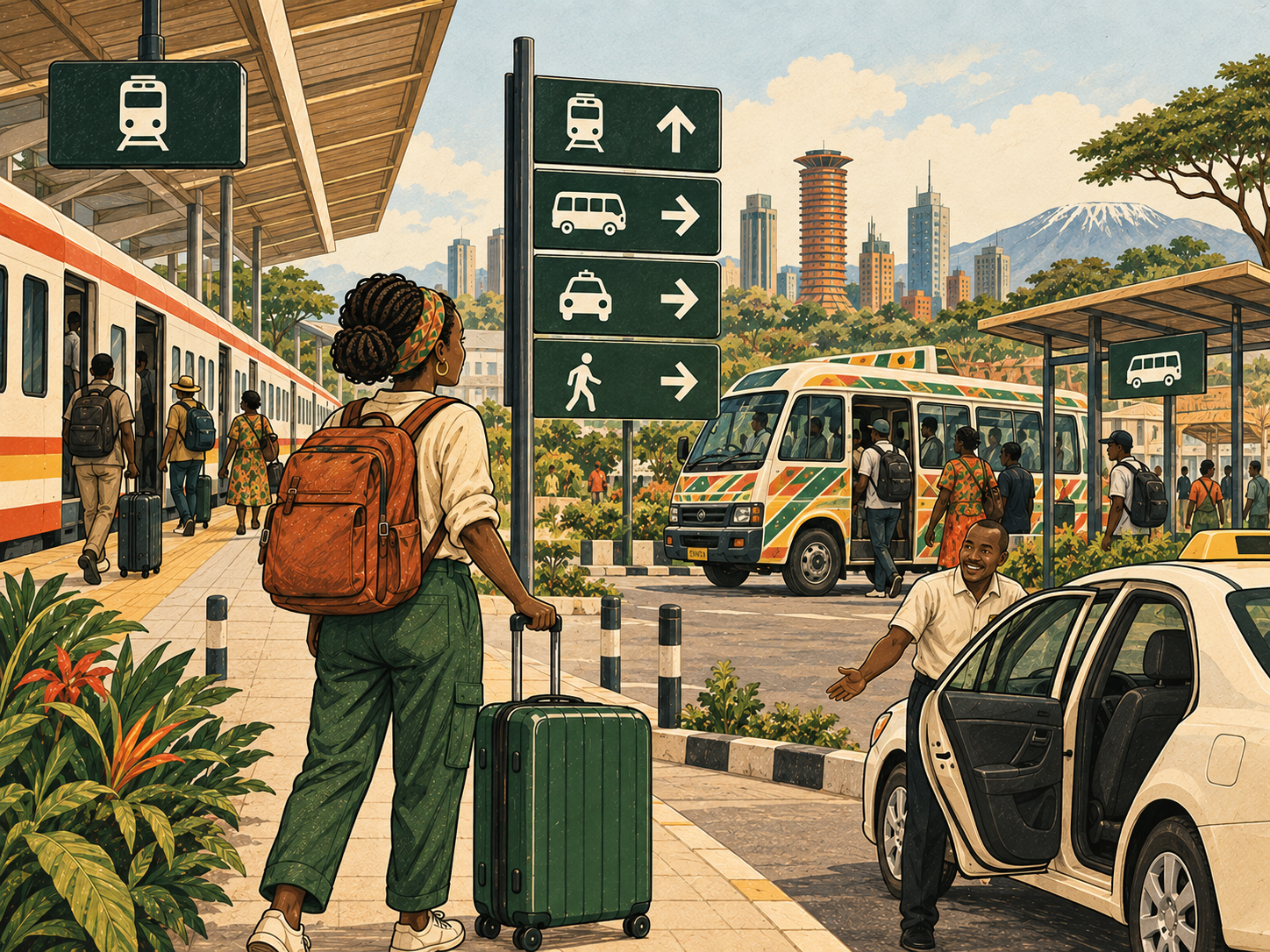
Matatus are privately-run minibuses (and larger buses), the backbone of local transport — cheap, frequent, colorful, sometimes chaotic.
- Routes: identified by route number and destination painted on the vehicle, and by the stage (terminus) they leave from. Ask locals which stage and number you need.
- Boarding: board at a stage, or flag one on its route; a conductor ("makanga"/"tout") hangs by the door calling the destination.
- Paying: pay the conductor in cash (sometimes M-Pesa) — fares fluctuate with demand, time of day, weather and traffic (higher in rain/rush hour). Ask the fare before or as you board; watch what locals pay.
- Stops: tell the conductor where you're going; to get off, say "shukisha" (drop me) or "shukisha hapa" (here), or knock the roof/rail.
- Luggage: small bags fine; large luggage may cost extra or not fit — for lots of luggage use a taxi/ride-hailing.
- Etiquette & safety: keep bags on your lap and phone/valuables out of sight (pickpocketing happens in crowded matatus and at stages); avoid flashing cash; prefer daytime travel; some matatus drive fast — you can choose another.
Ride-hailing & taxis
- Uber, Bolt and Little operate in Nairobi, Mombasa and other cities — app-set fares, no haggling, GPS-tracked; a safe default for visitors. Bolt/Little often cheaper; compare.
- Also Uber Boda / Bolt Boda (app-based motorbike) for beating traffic.
- Street taxis: where apps are scarce — agree the fare before you get in (meters are rare).
Boda bodas & tuk-tuks
- Boda bodas (motorbike taxis): fast and cheap for short trips, but Kenya's road-accident risk is real — insist on a helmet, avoid at night/in rain, and skip them if the rider seems reckless.
- Tuk-tuks: common at the coast and some towns for short distances; agree fare first.
Ferries & boats
- Likoni Ferry (Mombasa): links Mombasa Island to the south coast (Diani); free for pedestrians, small fee for vehicles; very busy at rush hour.
- Lamu & islands: dhows and motorboats are the main transport (Lamu Old Town is largely car-free).
Driving & self-drive
Requirements
- Drive on the LEFT.
- Bring your national licence + an International Driving Permit (IDP); rentals and police checks expect it. For longer stays you may need to convert/endorse the licence — verify current rules.
- Minimum age / deposit / insurance requirements vary by rental company; confirm insurance covers you fully.
Road realities
- Traffic in Nairobi/Mombasa is heavy; allow generous time.
- Road conditions vary — good highways plus rough/unpaved rural roads; a 4x4 is wise for parks/rainy season.
- Hazards: potholes, speed bumps (often unmarked), pedestrians/livestock, and wildlife near parks. Avoid driving at night outside cities.
- Police checkpoints are routine — be polite, have documents ready. Don't offer or pay bribes; ask for official procedures/receipts.
- Fuel: petrol stations common on main routes, sparse in remote areas — fill up before long stretches. Tolls exist on some expressways (e.g. Nairobi Expressway — payable by M-Pesa/electronic tag/cash lanes).
- Parking: paid parking in city centers; use guarded/hotel parking where possible.
If you have an accident / breakdown
- For emergencies dial 999 / 112. Contact your rental company's breakdown line; don't leave the scene of a serious accident before police attend. Keep the rental's emergency and insurance numbers on your phone.
For "Kenya without a car" routing and "Kenya without safari" itineraries, see the roadmap — the transport backbone here (flights + SGR + buses/shuttles + matatus + ferries + ride-hailing) makes both very feasible.