Last verified: 15 September 2026 · 🟡/🔴 volatility (allowances & rules change; check KRA / official sources).
Authoritative source for customs: Kenya Revenue Authority (KRA) — kra.go.ke. The summary below is corroborated from operator/customs guides; verify specifics before you rely on them.
Departure procedure (JKIA & other airports)
- Arrive early: for international departures, arrive ~3 hours before your flight (JKIA security and check-in queues can be long). Domestic: ~1.5–2 hours.
- Security screening at terminal entry and again at the gate.
- Check-in & bag drop, then immigration (exit stamp/biometrics), then customs if you're carrying items to declare.
- No airport departure tax to pay separately — it's included in your ticket.
- Luggage storage / left luggage available at JKIA if you need it on a long layover.
Missed flight: go straight to your airline's desk (or call them) to be rebooked; fees/rules depend on your ticket. Don't leave the airport before speaking to the airline.
Currency rules
- Declare large sums of currency at customs. The common international threshold is the equivalent of USD ~10,000 (in cash / negotiable instruments) — declare at/above this. Verify the exact current threshold with KRA. Undeclared large cash can be seized.
Duty-free allowances (bringing goods, incl. on return trips)
Typical personal allowances (verify current KRA figures):
- 200 cigarettes, or 50 cigars, or 227 g of tobacco
- ~1 L / 1 bottle of spirits or wine
- ~1 pint / ~500 ml of perfume/toilet water
⚠️ Prohibited & restricted EXPORTS — do not take these out
- Wildlife products: elephant ivory (raw or worked), rhino horn, tusks, skins, hides, animal trophies — illegal to export without proper permits; trafficking carries severe penalties. Don't buy them at all.
- Game trophies / bushmeat, and unprocessed/fresh fish.
- Precious metals/stones (gold, diamonds) without authorization.
- Wood charcoal.
- Antiquities, cultural artifacts and protected plants/seeds/soil — need permits/clearance.
- Endangered-species products are covered by CITES — even "curios" made from turtle shell, certain corals, or protected hardwoods can be seized at your home border.
If a vendor offers "real ivory" or wildlife products, decline — buying fuels poaching and can get you arrested at either end.
The plastic bag ban (also relevant on arrival)
Kenya has a strict ban on single-use plastic carrier bags, with heavy penalties. Don't pack items in plastic bags; use fabric/paper. Certain single-use plastics are also banned in national parks, beaches and protected areas.
Meaningful, ethical souvenirs (and how to buy well)
Good buys that support local makers:
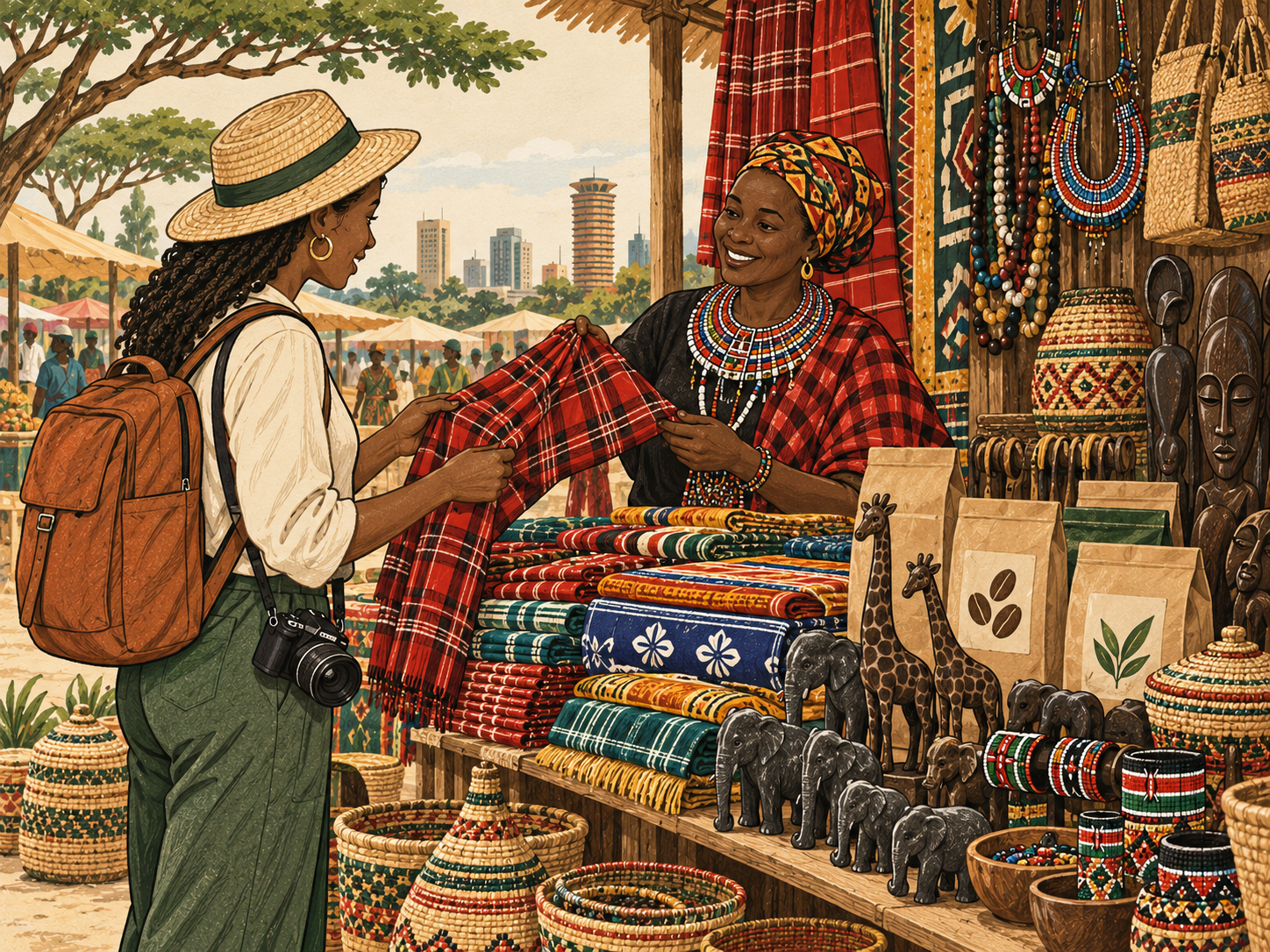
- Maasai shuka (bright checked blanket-cloth), kikoy and kanga (printed cotton wraps, often with Swahili proverbs)
- Beadwork & jewelry (Maasai/Samburu), Kenyan-flag bracelets/bangles
- Soapstone (kisii stone) carvings from Kisii/Tabaka
- Sisal baskets (kiondo), woven crafts
- Kenyan coffee (AA) and tea, macadamia nuts
- Art, prints, books, music, leather goods, local fashion & jewelry from Kenyan designers
Buy ethically & authentically:
- Prefer artisan cooperatives, craft markets and fair-trade shops so money reaches makers.
- Bargain politely at markets (see culture file) — but pay fairly.
- Ask about provenance; avoid mass-produced imports passed off as local.
- Never buy wildlife/ivory/shell/coral products.
- Coffee/tea/food: keep receipts; check your home country's agricultural import rules (some seeds/plants/foods are restricted on arrival home).
Sources: Wildlife Kenya Safari customs guide; Roafly customs/bans guide; general KRA-based summaries. Verified 15 Sep 2026. Confirm allowances and thresholds with KRA (kra.go.ke) before travel.